Wednesday, June 26, 2013

In Defense of Marriage

Thousands of ears and eyes are focused upon the Supreme Court this morning as we await their decisions on two cases of equality. Two appeals are testing whether the fundamental constitutional right to marry is for all couples or only couples where one person is a man and the other is a woman. What the court does today could change the lives of thousands of people in our nation - the 120,000 legally married same-sex couples in our country and the thousands of additional couples who are or will one day seek the same gift.

I remember well when the Defense of Marriage Act was making its way through Congress. I was on the staff of Senator Tom Harkin at the time, sitting next to the person who was responsible for responding to letters from Iowans who wrote on this issue. I can still visualize the stack of letters sitting on Kim's desk 17 years ago. But I don't remember having an opinion about marriage other than the fact that I knew I would one day marry, have two children and live in a four-bedroom house with a garage. I knew what my life would hold (not that things always turn out the way you thought they would - thankfully!) - but I did not have any inclination to become involved in a conversation over what the lives of others could hold.

Seventeen years later I find myself as one of many voices of dissent when it comes to both the Defense of Marriage Act and the laws of the United Methodist Church. I believe with my whole heart that marriage is a fundamental right that enables two people to experience life and happiness to the fullest possible extent (when done well). I believe we are withholding a gift from God and a fundamental right when we say that only heterosexual couples can be married in our churches and by our pastors.

Last fall I married a couple who came to the altar with few people supporting them. Never before have I received so many nasty phone calls and threatening messages from "friends" who wanted to do everything they could to prevent the marriage. "She's making a huge mistake," they would tell me. "You're not going through with this are you?" "How could you possibly be a minister and bless their relationship?" I have never heard so much hate mixed in with any other experience as a pastor, and the voices caused me to pause and scrutinize this relationship, going through the steps of the premarital counseling curriculum as though it were a UN peace negotiation.

People were upset not because of the way this couple treated each other or the depths of their love. They were upset because of the age difference. How could a 59-year-old man possibly love a 90-year-old woman?

After much prayerful conversation, I determined that both of these people were in for a blessing. It would be her third marriage, and she's the biggest lover of love in my congregation. It would be his first. He was ready to care for her, to do everything possible to keep her in her home the rest of her life (no small gift when one does not have any children or close relatives). She was ready to make space for him in her home, to share life together, to be in real community (no small gift when one lives in a rented room with family thousands of miles away). How could I withhold a blessing? How could I say "no" when it seemed like God was answering countless prayers through this relationship?

Craig and I have not yet conceived a child. Sex does not define our marriage. The greatest gift of our marriage is companionship - knowing that beyond a shadow of doubt, no matter what happens in this life, it will be a moment spent together. I know that if I am in the hospital, Craig will be by my side. I know that if I die, Craig will take what resources we have and share them in the same way I would. I know that if I am crying tears of happiness or sadness that a tissue and a shoulder will be waiting. Our marriage is far from perfect but I am a kinder, more gentle and loving person because of Craig. I experience life through what God does in our midst as a married couple.

The piece of scripture we regularly turn to at marriage ceremonies is found in Paul's first letter to the Corinthians where Paul defines love for us. "Love is patient, love is kind...." It reads like a romantic kind of puppy love so we put the words on pillows and cross-stitch them to hang on our walls. But the words are anything but easy to embody and rarely lived out to their fullest in marriage. They are not a description of love between man and wife. They are the words that define the love of Christ - a love we are to embody.

Rarely is this love lived out when we are defending anything.

Defense requires walls, divisions, fences and arguments. Defense requires me to tell you why what I have is better than what you have and why you are not worthy to receive it. Defense rarely includes Christ who was constantly tearing down walls, making things even, and putting people on equal playing fields. We cannot defend something without leaving others out whether it is defending our wealth instead of sharing it, defending our borders instead of allowing people to cross, defending our table as though it is ours instead of saying it is Christ's table who bids all to come, defending our marriage instead of seeing how others could be blessed in the same way despite their age or sexual orientation. People who spend their lives defending what they have are some of the ugliest, nastiest, stingiest people I know. A church made up of people who are constantly defending their time or their resources is a church that is not going to have its arms and feet go far in the name of Christ.

I'll defend marriage as one of the greatest gifts God has ever given to me. I'll defend marriage as a blessing God first gave when God noticed in the garden that it is never good for a person to live alone. But I'll never defend marriage as something that is to be shared only between a man and a woman.

It's time to head to the Supreme Court with lots of prayers and anticipation for what the day will hold.

Tuesday, June 25, 2013

Rescue Efforts

"I praise you, O God. I bless you, O God. You have rescued me."

We chanted the words over and over again during an evening service at Glasgow's St. Andrew's Cathedral just moments after becoming annoyed with each other at our inability to find the church after seemingly walking all over the city. It was our first and only night in Glasgow, and there were a million places I wanted to be other than sitting or kneeling in a Catholic Church - the church where I am normally made to feel unwelcome, the place where I cringe when I am not invited to a table behind which I normally stand and invite all to come. But it is in this church - this place I did not want to be - where I felt myself paralyzed by grace for the first time in what is labeled a "Summer of Deep Engagement."

I've sung the lyrics before, "Do not be afraid I am with you. I have called you each by name." But the song continued with words that stung me, words that crept into each crevice of my heart. "I praise you, O God. I bless you, O God. You have rescued me." My search for rescue, a search I did not envision to be part of this summer of deep engagement, was ignited with these words.

I was one week into sabbatical and already aware of a need to be rescued. I've developed some rather unhealthy addictions that are preventing me from experiencing the fullness of joy that comes when one is in the presence of the Lord. I'm addicted to success over faithfulness, growth in numbers over growth in discipleship, and dare I say a devotion to the church over a devotion to Christ. I've gotten caught up in doing instead of being - because there's been so much to do and expectations placed upon me that have added pressure to the doing.

I need to be rescued. I want the first question I ponder at 2:00 on Sunday afternoon to not be "How many people were in worship today" but instead "How did God work in people's lives today?" I need to be rescued from the hold of an institution that asks about numbers more than transformed lives. I need to be rescued from my tendency to "do, do, do" so that I can be - be with God, be the person God has created me to be, be alive, be filled with joy.

The rescue efforts have started.

O God, I do praise you. I do bless you. You are rescuing me.

And when the service was over, the priest stood and offered this benediction, "Go and announce the Gospel." These words are becoming my prayer - that I'll be the kind of person who is constantly announcing the good news - and that the congregation where I am privileged to be a pastor will do the same. Let's be rescued from whatever it is that is preventing us from this one task: announcing the Gospel through the very lives we live.

Tuesday, June 11, 2013

Thin Places

I've taken a plane, a train, two ferries and an hour bus ride on a one-lane road to get to the thin place known as Iona. It was Geroge MacLeod, one of the original members of this community, who applied this phrase to the tiny island in Western Scotland, believing that only a tissue separates heaven from earth in this spot of God's creation.

And certainly it is beautiful.

My eyes have beheld cattle and sheep, ocean and mountain, greenery and flowers. It's a gorgeous place filled with beautiful people. I've taken time to praise God here. But I'm not sure I feel any closer to God in this place than I do other places. In fact, I've been reflecting upon the other thin places in my life, and I've concluded that thin places can be found whenever we make room for God.

Certainly we make from for God when we journey long distances with the expectation of seeing God. But I also know God is near us - all the time. We just have to let go of all the stuff that makes the tissue thicker than it needs to be - the desire to please others more than our desire to please God, our stuff we accumulate, our need for success, the noises that come from television, radio or city sirens, our constant rushing instead of just being - alone, with God.

There are two women who are members of our church who I now visit since they cannot get to church. They greet me at the door before welcoming to their table where tea, sparkling water and dessert are shared. We talk and then pray together before I leave. They then follow me with their eyes down the hallway, waving and smiling until the elevator comes. Each visit to them is a thin place, a space where I know God dwells, a spot where I can hear God calling my name.

There are mornings when I rise early and position myself squarely on the couch before doing anything further. I open myself to God's movement during the day, ask for forgiveness and know God is with me. It's in my living area, on a piece of furniture I'd love to get rid of, but it is a thin place because I know God is present.

There are times when I am leading worship and I realize it is God who is speaking and not me. That is a thin place.

There are mements when I'm invited to pray with someone, allowed to peer inside dreams that are not realized or hopes that are not yet materialized. That's a thin place.

What I'm learning this week is that it's a incredible gift to be able to travel to a far-off place to encounter God. But God is not in this place more than God is in Washington, D.C. God is Emmanuel, God with us. God is everywhere. Our task is to reduce the layers we have accumulated between us and God until we see that God is both all we have and all we really need.

Saturday, June 08, 2013

Last Chance

It's a gift to step away from your congregation with the knowledge that the people who are covering you are better at your job than you are. My mentor and friend Peter Storey is now covering our pulpit until July 7. Peter brings many gifts that I don't have. His voice brings a message that places people in the Spirit's direct line of fire. His journey is one filled with risks taken in the name of Jesus. His love of Jesus and his message far outweighs his desire or need to satisfy the expectations of the religious institution that requires us to report numerical statistics each week. Peter knows Jesus better than most people in my life, and I love hearing Peter tell the stories of Jesus.

I gathered with a small group on Sunday evening to listen to Peter's first teaching session with our church. Many of the things he said are things I heard when I was his student at Duke Divinity School. But the lesson entered my heart differently this time as my context is radically different. What he said matters in a way it did not matter before.

"What we saw this morning is God's best, last chance at healing the world," Peter said, referring to the 124 people who filled the pews on Sunday morning.

Wow. Crap. How can it be?

How can we be God's last chance at healing the world? How can we be the vehicle God most wants to use to bring about healing? God, surely there is another way for you to end homelessness in Washington, to bridge the gap between those who have and those who have not, to make sure every child receives a quality education, to fill bellies that are empty, to provide community to those who only know the emotion of loneliness, to end violence on our streets, to welcome the outsider whether they are documented or not, to bring together that which is separated. Do you really expect us to do these things?

Peter then shared how God is more interested in verbs than in nouns. Our God is a doing God, and the church must be a people who do - a group called into action - out of the pews and into the world.

The church is called to do four things well: proclaim, teach, live the true community and serve.

We must tell the story in a way that arrests people who hear the story of Jesus. We must speak prophetically into current situations. We must proclaim the good news at every opportunity with our words, our actions and even our buildings.

We must teach in ways that grow people, challenge people, transform people and mobilize people.

We must live the true community by demonstrating the transforming and reconciling presence of Christ in the lifestyle of the community, loving each other in a way that commands wonder, love and joy.

And we must serve Christ where we meet Christ - in the suffering, pain, oppression and need of his brothers and sisters - those whom we see as "the least of these" in the world.

God is rather serious about the church - the body of Christ on this world. We cannot simply show up for one hour each week and then go about our business as if we matter most. Our faith is one that should fill not only our souls and spirits but our hands, our feet, our mouths, our ears, and every resource God has entrusted to our care.

All of this learning is from the first night. Imagine what he will share on the remaining five Sundays.

Almighty God, thank you for the amazing people who you have sent to share your good news to Mount Vernon Place this summer. We are grateful for the prophets in our midst and pray you would use each one to help us be ready to proclaim, teach, live the true community, and serve. Help us to fully comprehend what it means for us to be your best, last chance at healing the world. There is so much pain in our city. There is much that is broken and in need of being fixed. Let us not shy away from the opportunity to be part of your efforts to heal. Let us be prophetic. Let us be faithful. Let us be a people who are mobilized to seek your kingdom before any other thing. Bless your people who gather at the corner of 9th and Mass. Enable them to have a summer of a lifetime so that others might be able to experience life more fully. Amen. 

Thursday, June 06, 2013

Keeping the Faith ... In Community

Each day this week I have taken time to post something on Facebook that describes the highlight of that day as a way of marking my first week on sabbatical. I've posted about a massive housecleaning that resulted in a generous pile of stuff left at Goodwill. I've shared a photo of Great Falls National Park taken during a journey with a friend yesterday. Today's highlight is undoubtedly time spent with a group of women who have come to be gifts from God in my life.

Brought together by a grant through Austin Presbyterian Seminary, this group has gathered monthly for more than a year now. We've played with clay, hiked through the forest, sat by a pool, discussed what Sandberg's book "Lean In" means for each of us, learned from a great preaching professor, and shared laughter, sorrow, hopes, dreams, food and cocktails in our time together.

When I posted the image above after Annual Conference last week (missing our friend, Ginger), one person shared it on Twitter saying "these are the woman who help me keep my faith."

Rachel could not have described the gift of this group any better.

Each additional step through discipleship convinces me that the journey is not meant to be a solo flight. I'm not sure any of us are capable of keeping the faith - whether it is faith in God or faith in the church or even faith in ourselves - on our own.

We need each other.

We are called to be together - to reveal Jesus to one another when Jesus is seemingly absent, to pray when we have lost the ability to pray, to name our gifts when we have convinced ourselves we have none, to have faith when faith is hard to find, to cheer us on when everyone else is trying to cheer us out, to be present when what we want to do is walk away. In the words of my former colleague, Greg Jones, we need holy friends who are willing to point out the sins we have grown to love, name the gifts we are afraid to claim and help us dream dreams we would never dream on our own. My group of clergywomen remind me often of why everyone needs the church - and especially a church where authenticity is embodied and spaces for vulnerability abound.

Not long ago a seminary student made an appointment to see me. We had barely sat down with our cups of coffee before tears started to flow. It had been a difficult academic year. The voices that propelled him up the East Coast to the Nation's Capital were not as audible in May as they were in August. The call of God that once seemed so clear was more like muddy water. Seminary was no longer a gift but more of a burden. When I asked him about his church - about the community in which he had gotten involved in this first year of formation, I was told there really had not been much time for that. "I've visited a few places but don't really have a place to call home."

I left that conversation with a deep amount of sadness at this person's inability to see their pure beauty and remarkable gifts. I also left knowing that if they had just come to our church - if they had just allowed themselves to be received by our community and opened themselves to serve Jesus in our midst - that they would be in a different place. I believe we would have kept naming his gifts.

We all need community - real community.

Even more recently I shared time with a dear friend who is between two church communities. One community is closer to home. The other is more of a drive but comes with a sense of greater familiarity. This friend is an amazing person of faith - someone who has regularly brought Jesus to me. But he's not sure about Jesus now. He prays - but he's not sure who he's praying to when he offers different words of gratitude or petition. The conversation was enough to convince me again that we all need a church - a real place where we can come with our real selves and engage Jesus in real ways. We cannot keep the faith alone.

Jesus was capable of anything. He healed the sick, turned water into wine, cleansed the leper, told the paralytic to get up and walk, and changed tax collectors into devoted followers who gave away their wealth. He had so many powers and was constantly applying these powers in real, tangible ways. And still, Jesus needed community. He called a group of twelve disciples to follow him and made the one who was constantly making ridiculous comments or failing to get with the program "the rock" - the one upon whom he built his church. Even Jesus needed community - an imperfect community of travelers who would journey with him to hard, rewarding, exciting and challenging places.

Are you struggling to keep the faith? Why not allow a community to keep it for you - to hold for you what you've been unable to hold on your own.

Are you struggling to know who you are - not what your business card says about you but who you really are? Why not allow a faith community to name your gifts for you - those gifts that enable others to see God at work in the world?

I'm so grateful for these women in my life who help me keep my faith - in Jesus, in others, and even in the United Methodist Church - while seeing God actively at work in the world around us.

Tuesday, June 04, 2013

Letting Go

A colleague of mine embraced Sabbath with her words on Facebook yesterday morning. She shared in a post how the laundry was piled high and life maintenance errands were needing to be done, before letting folks know that she would be embracing the good gift of Sabbath. I read her words in awe and wonder as though reading a travel book for a place I longed to go but had not yet been before.

I've never been good at keeping the Sabbath.

I'm good at not coming into the office on Fridays. My voice mail at church tells everyone that Fridays are my Sabbath. I start Fridays in prayer before proceeding to the gym. But I rarely make it through a Friday without running at least one errand and checking my email ten times.

I've never been good at keeping the Sabbath.

I believe with my whole heart that the Sabbath is a gift from God. It is a day when God beckons us to crawl into God's arms like a child climbs onto her mother's lap. It is a day when we can allow ourselves to be fully loved by God as we trust that God will tend to whatever it is that we normally do. There is something powerful about stopping and trusting and being still.

But I've never been good at it.

And yet, here I am on my second full day of clergy renewal leave. I have been given the good gift of a generous grant to do what makes my heart sing. For three months, I get to take absolute delight in stepping away from the demands of pastoral ministry in order to travel, read, write, exercise, play, pray, worship and stay up late on Saturday nights. I've done my very best to prepare our congregation and staff. Hundreds of emails have been crafted and sent with detailed instructions on how to continue the work of the church. A gifted ministry intern knows what to do if a pastoral care emergency arises. A minister emeritus is on call, too. My task now is to embrace the gift of extended time away.

The Psalmist reminds us to "Be still, and know that I am God!" It's not a sentence that ends with a period. Rather, there is an exclamation point at the end. God is serious about our being people who allow God to be God - God who is alpha and omega, the beginning and the end. God who is creator, redeemer and sustainer. God who can calm the storms and provide a way out of no way. God who is almighty and all powerful.

Why is it that we have such a hard time letting go of our control and accepting God's desire to lead, shape, form and reform our lives? And why is it that we believe we know what is best for the church when it really is God's church? And who taught us that the church cannot possibly thrive without us? And why is it that we fail to receive one of the greatest gifts God offers - rest and renewal accompanied by a promise that God will take care of us?

I'm trying hard to listen for God's voice which requires me to quiet myself down and let go. I'm seeking to be still. I'm praying to find that space and place where I know beyond a shadow of a doubt that it is God's movement in my life and in the life of our church that is the most important thing.

I'm learning to slowly let go. In the meantime, I am caught up on my errands, have cleaned out the closets and gone to Goodwill. I've purchased a cute dress and paid some bills. I sent enough emails yesterday to have a church member tell me that "you suck at sabbath leave."

It's hard to let go. Very. Hard.

Be still, and know that I am God!

I'm trying God. Lord knows I'm trying.

Tuesday, May 28, 2013

Leaving a Legacy - Reflections on Memorial Day

Memorial Day came with certain traditions in our family. Each year we would pile into the brown station wagon and head to Northern Missouri. A feast would await us upon arrival at the Claycomb family farm - ham, turkey, homemade pies and several sides. But we could not get to the table without walking by buckets of fresh flowers that Grandma had picked earlier in the day.

When our bellies were full, we would pile back into the car and head to the cemeteries for what seemed like a tour of every burial plot in a sixty-mile radius. At each stop, we would go walking through the large grave yard until we found the plots where relatives were buried. Grandma would then repeat a carefully thought out process at each plot. Ferns were laid first as though covering the body and then flowers were placed on top of the greenery. It was an act of remembrance for each person who once graced the earth with their presence, playing a role in making members of my family who they are today.

I don't miss going to the cemetery.

I used to regularly tell my mother that I would plant a rose bush on her grave so she would always have flowers even if I did not visit.

I don't think we have to go to cemeteries to remember people. In fact, I'd be perfectly fine with no headstone at all when I die. I'd rather my legacy be remembered in different ways.

What kind of legacy do you want to leave? How do you wish to be remembered?

Each December I receive certified mail from a local CPA. The letter inside reads the same each year starting with the words, "It is my pleasure to inform you that it is time once again for the ---- Family Foundation to make its annual donations to the beneficiaries named in the foundation documents." The letter then tells me how the woman was an active member of our church until her death nearly 10 years ago. The check that arrived with the letter last December was for over $21,000. A similar check has arrived every December since 2005. What an amazing legacy! One could look at our growing children's ministry and see this woman's face as she is making sure we have money to tell our children the stories of Jesus. One could listen to music playing in the sanctuary on Sunday mornings and think the same. One could visit a small group during the week and hear this woman's voice making sure that Mount Vernon Place would be a strong presence in the nation's capital for years to come. Or one could visit the shower ministry and feel hot water pouring out of spouts and upon people who are able to get clean. This woman's generosity is making a real difference - nine years after her death. What an amazing legacy. What a way to be remembered!

Last year our church lost a member who meant the world to me. Howard was almost 104-years-old when he died but was still at weekly Bible study a few months before. He loved watching our church grow. On communion Sundays, he would regularly count the people coming down to receive the sacrament and inform me how many people were in church, often telling me how much our church had grown in the last month alone. I adored this man, and I get to see his light every Sunday through the gift of a seminary student who is in ministry with us. This man's final gift to our church was the establishment of an endowed scholarship at Wesley Theological Seminary - a gift that provides a generous scholarship to a student who then serves at our church 10 to 12 hours a week. Each time I see Rachel, I get to remember Howard. Each time I watch her claim her gifts and grow more confident in her call, I get to hear Howard cheering her on and our church on, as well. What a way to be remembered!

Not long ago, the New York Times wrote a story about a man who left millions to no one. He was bright, educated and successful. He amassed a wealth worth $40 million when he died. And now this $40 million will likely be turned over to the state because there are no living heirs to be found. Imagine all the ways $40 million could be invested - in schools, churches, synagogues, playgrounds, communities, ministries far and near. Imagine the difference $40 million could make. I cannot imagine a colder death than this one. Who will remember him?

There is life beyond death - I believe this with my whole heart. It's one of the reasons I regularly proclaim the good news of Jesus' life, death and resurrection. But we also do not have to wait until the second coming to live again. We can continue to live through the choices we make today about how what we have will be shared and distributed to others when we leave this earth.

When I die, please don't worry about purchasing an expensive headstone. You do not need to lay flowers on my grave. Rather, keep remembering me through ministries I love - a seminary that formed me, churches that caused me to become a more faithful pastor, places that made a difference in my life and will continue to make a difference in the lives of others in the years to come.

Monday, May 06, 2013

A Prayer for the House

Last Friday I was invited to serve as the Guest Chaplain for the House of Representatives. It was a gift that brought my life full circle. Never in a million years would I have imagined when first coming to the Hill as a Scheduler to Congressman Eric Fingerhut in 1994 that I would return in this capacity.

The opportunity has also reminded me of the importance of praying for our Members of Congress and the incredible weight of responsibility and privilege we place upon them when we elect them to office. I am so grateful to be a pastor in the city of Washington and especially thankful for the gift of being able to offer this prayer on Friday. You can also watch the short video on C-SPAN here.


Loving God, thank you for the women and men you have called and equipped to be members of this body – people we criticize while not knowing what we would do if we walked in their shoes, individuals we say need our prayers while regularly forgetting to pray for them, citizens we often tear down instead of seeing your image upon them.
Grant each Member and their staffs the capacity to dream new dreams for our nation and then give them courage to legislate in a way that ensures peace, values every person, promotes sound stewardship, and moves our country forward without leaving anyone behind.
Heal that which is broken.
Restore relationships that are separated by party lines.
Surprise the cynical.
Awaken the exhausted.
Humble the exalted.
Unbind those who are tied to anyone but you.
And when the road seems rough or too divided, unify us once more.
Amen.


Tuesday, April 30, 2013

Seeing George W in a Different Light

George W. Bush reemerged in the spotlight last week with the dedication of his library on the campus of Southern Methodist University. As I watched highlights of his presidency on the evening news, a picture emerged that I saw in a whole new light.

It's a picture of his Chief of Staff, Andrew Card, telling President Bush about the first attack in New York City on September 11. When the scene is playing live, we watch President Bush look like a deer caught in headlights. He seems confused. He's clearly not sure what to do. He's caught between one commitment to children listening to the President of the United States reading to them and the rest of the country watching to see how he will respond.

When I saw the image last week, I had sympathy for George W. for the very first time. As I watched the events of that horrible day unfold once more, I saw the incredible weight of leadership.

Only five living men know the weight of the Presidency - what it's like to be the leader of the United States with all the world watching your every move. While we cannot relate to the heavy load of their role, many of us know what it's like to be the one making decisions with countless people watching to see how we will act, ready to criticize our every move.

We do not have cameras rolling on us, but we know what it's like to be in the middle of one commitment when we hear something that demands our full attention.

We know what it's like to be called to calmly shift our attention from one focus to another hoping that we will not let down the people we are turning away from.

We understand how paralyzing it can be to have people waiting to hear a word from us - as we pray our words will make sense and be received with power and conviction.

George W. Bush had his leadership put on the line. We criticized his every move. We wondered why he did not stop everything and start acting that day. Why did he not excuse himself immediately and go lead our country through crisis?

The more I understand how hard leadership is, even leading a church with 150 members, the more I sympathize with George W.

Leadership is an incredible gift and a daunting, humbling responsibility.

Friday, April 19, 2013

A Different Kind of Week

It's been a different kind of week for our nation. We are people who regularly go through life without being afraid. We show up for races to cheer on thousands of runners who are checking an item off their bucket list, making a dream come true, reaching another goal. We send our kids off to school on yellow buses and then go about our business until it's time to meet them on the corner a few minutes after 3:00. We walk the streets at night and day. This place we live is America, after all.

Bombs aren't supposed to go off near the finish line.

Entire cities are not supposed to be on lock down.

Plants where our family members have worked for decades are supposed to be safe.

Armies of police with fingers on the triggers of massive assault weapons are to be seen in Israel or Jordan or countless other countries - but not in quaint New England communities.

It's been a different kind of week.

I've watched more CNN than I have in months.

I've found my spirit in a funk as my heart has grown heavier instead of lighter.

There's no way we can make sense of it all. Nothing makes sense when two brothers create enough terror to paralyze millions of people. Nothing makes sense when hatred is lived out in such tangible ways. Nothing makes sense when fertilizer plants explode, wrecking havoc and pain upon an entire community.

But we can gather. We can pray. We can be - be together and with God. We can breathe - deeply and as a community.

We are in the third week of our sermon in the series, "Faith, Politics and Policy." This Sunday's sermon is titled "God's Garden." It's designed to talk about why people of faith should care about the environment and climate change. More importantly, it's focus is on what kind of world we want to pass down to our children. There will be time to talk about guns and violence next week - on April 28 - as previously scheduled.

No matter how much darkness there is in this world, there is a significant amount of beauty that is worth passing on. Even the words of an uncle were filled with hints of light as he asked his nephew to please come out and seek forgiveness before also sharing how he wants to be on his knees in front of those who knew and loved the victims, begging for forgiveness.

There is plenty of evil in the world. But there is also an abundance of good. There's a lot of darkness. But there is even more light.

You're invited to join us on Sunday at 11 at Mount Vernon Place. You can wear whatever you want. Jeans or shorts are fine. Even yoga pants will do.

Step away from the images of terror that have brought about so much fear this week. Turn away from CNN and stories filled with pain. Turn instead towards a community centered on one who came so that we might have life and life abundant. He never promised life without pain. But he said he would be with us through the pain because he is Emmanuel, God with us.

We don't have any answers to why things happened the way they did this week. I'm not sure there are any answers or explanations to offer. What we have are love and compassion to share. We have prayers to lift - for people who are mourning in Boston, in West, Texas and around the world. We have community to embody - an authentic place where any masks behind which people are tempted to hide can stay outside. We also have faith in one who promises that the light shines in the darkness and the darkness has never overcome the light.

Bring your full self - your fears, your hopes, your pain and your questions. It would be a privilege to be with you on Sunday.

Tuesday, April 16, 2013

For Goodness Sake

I see a lot of goodness in the world.

I saw it last night when an older couple in our church made the 15 or so mile commute to be present at a meeting. She took in every word of the conversation, reminded us to please be sure that we are building the strongest children's ministry possible, commented when she could. He sat just outside the meeting room and waited for her the entire time - until nearly 9:00 at night.

I see goodness in the patience and dedication of men and women who rise before the sun in order to make hot coffee, set out donuts and other baked goods on a platter, and then open doors so unhoused neighbors can come in and start showering before receiving clean undergarments beneath the sanctuary of our church.

I see goodness when someone stops to help a family standing on the sidewalk in DC with a map in one hand and puzzled looks covering their faces.

I see goodness in the way a man in our church cares for his wife who has limited speech skills and sometimes becomes agitated in worship.

I see goodness in people who stop to buy a copy of Street Sense on the streets of Washington.

I see goodness when people smile and say "good morning" in a city where most people keep their focus on their next destination.

I see goodness in children who innocently play, laugh and find delight in new things.

I see goodness in tulips pressing their way up through the depths of the ground.

I see goodness in people who give to an Easter fund at our church, allowing our church to help when people are hungry or in need of a prescription or facing a challenge.

I see goodness in thousands of people who have rallied behind a woman and her family who just lost a 5-year-old son.

I see goodness when people take time to write a note or make a call, just to let someone know they are thinking about them.

I see goodness every single day.

With so much goodness in the world, how can there be so much hate?

How could anyone devise a plan to hurt as many people as possible at the finish line of a race that involved over 24,000 runners who have trained for months?

How could anyone create such devastation at a place where people stricken by loss at Sandy Hook Elementary School were also gathering because many runners ran the race for them?

How could someone carefully craft and execute a plan and then wake up today with a capacity to see their plan as successful?

On mornings like today, I find my faith in the words of John, "The light shines in the darkness, and the darkness has never overcome the light."

There is a lot of pain wrapped around the light. There are pieces of barbed wire that one must be careful not to touch. There are reminders of hatred and brokenness. But the light still shines.

The light also shines in us.

Goodness is always stronger than evil.

How can we be light in the midst of so much darkness....for goodness sake?

Friday, April 12, 2013

The Gift We Give

Not long ago a colleague asked a question of his friends on Facebook. "What do you give to people who join your church?" Several colleagues quickly responded with suggestions ranging from a new Bible to a financial pledge card.

We don't give our new members a gift wrapped in pretty paper.

I pray, however, that what we give to everyone who walks in our doors is a gift that can be hard to purchase and sometimes even harder to locate in the city of Washington.

I pastor in a city where words are carefully crafted and somehow empty. Our church is located less than a mile from the Capitol - a neighborhood in which the most popular question asked is not "How are you?" but "Who do you work for?" In our city, we are easily defined by our business card. We allow the words embossed below our name to tell others who we are while being fearful of what might happen if people found out who we really are.

I'm also a pastor. I am in a profession where colleagues shy away from telling each other the full truth of our lives. We are required to fill out a weekly online form that tells our supervisors and other colleagues how many people were in our pews last Sunday and how many people came for small groups. We boast about how much our churches are growing and try hard to explain why when the opposite is true (and sometimes we even stretch the real truth). Rarely do we tell others how we really are.

Vulnerability is not a state we ascribe to attain or embody in the city of Washington or in pastoral circles. It's much easier to present a different front.

If I could give one gift to the people who join our church, however, I would give them a community where vulnerability is tangible - raw - naked to the eye. If I could give new members one gift, I would give them a community where people expect the truth - the full truth - and nothing but the truth.

Brene Brown describes the gifts I long to offer people in our church in a TED talk. She names for us our strong need to be connected. She knows what we in the church know - that God created us to be in community with each other. And she also spells out the fear we all have of what might happen to our connection - how the connection might be broken - if people knew the truth of our lives - our fears, our failures, our dreams, our heartaches, our insecurities, our pain.

Brown speaks about the courage that is needed to tell our whole-hearted truth. The telling of this truth requires that we let go of who we think we should be in order to be who we really are. We are at our best selves when we allow ourselves to be deeply seen by others - when we know that we are enough.

I see glimpses of this truth in the church I serve regularly.

At the same time, I see how far we have to go.

I don't think "fine thank you" should be an acceptable response in a faith community or in a gathering of clergy. As Brown reminds us, we live in a vulnerable world. We try hard to numb ourselves from this vulnerability. But the best way to deal with it is to allow our own vulnerability to be brought to the light of day in a community where people are willing to love us in spite of who we are.

I say every Sunday morning as worship is starting that we are welcome in our church by a God who longs to encounter us just as we are "no matter where we have been or where we have failed to be, no matter what we have said or what we have failed to say, no matter who we love or who we fail to love, and no matter what we have done or failed to do." I believe God loves our whole-hearted selves no matter how many flaws we might be able to see or are trying to hide. God longs for us to bring our whole truth into our community of faith.

While we may loathe admitting it, the truth is that most of us feel like we are hanging by a string that could break at any time. We have great jobs but aren't sure how best to lead. We have relationships that are falling apart and wonder how to bring what has been separated back together again. We are battling depression, seeing more darkness than light. We have beautiful children but wish they came with an instruction manuel. We are behind on our rent, praying that payday will come before the eviction notice is served. We have seen a rash where a rash should not be, and are hoping the doctor does not have to also learn about the night that should have never happened. We have been taking care of the pain on our own and realize how we now cannot sleep without at least two glasses of wine every night. We have a thousand friends on Facebook but no one to turn to or go out with on Friday night.

If I were to tell my colleagues the whole truth, I could name 100 things I'm afraid of, at least a dozen insecurities, and the feeling of being exhausted often because there is just so much to do and so many people to tend to - and how I regularly feel like a failure when people don't get visited or calls don't get made or cards don't get sent.

What gift do we give our new members? I pray we give them a place that longs to know the truth and then accepts the truth, loves the life in which the truth dwells and then does its best to live together in community. I pray we give them a real community that knows how the most faithful pathway to healing is providing space to bring our whole-hearted selves - every pocket and especially the place where our vulnerabilities dwell. That's a church worth getting up for on Sunday mornings, propelled by a God who is worth glorifying.

Saturday, March 30, 2013

May I Wash Your Feet?

It happened again on Thursday night. We had set the table, filled basins with hot water, set a dozen towels nearby, and strategically set a chair behind it all. The congregation recited the words of the Great Thanksgiving, the cup was lifted, the bread was broken, and an invitation was extended.

As you come forward to receive the bread and the cup this evening, you are also invited to have your feet washed as we remember Jesus' final commandment to love one another as Jesus has loved us.

Feet.

Not many of us like our feet. I became a consumer of Dr. Scholl's products at a young age when I realized my feet sweat a lot in gym class - and especially when I wore shoes without socks throughout the summer months. Thankfully this aroma has disappeared with age, but I know it well enough to recall how many uncomfortable moments it produced.

My feet don't exactly look great at the moment. Though sandal season is on the horizon, it's not quite here. My toenails are not even. They are not painted in pink.

Feet.

How many of us like our feet? And how many of us will allow another person other than a person we are paying (and tipping 20%) at the nail salon to wash our feet?

I'm always amazed when people come forward on Maundy Thursday and sit in a chair as I kneel in front of them. They watch as I take their foot in my hands and pour hot water on top, gently caressing their foot and then repeating the process with the other foot before holding them both around a towel, drying off the dampness. It is an action that moves me to tears every Maundy Thursday as I look at these feet and recall the stories behind them, the challenges carried by them and the places they long to go.

I cannot wash feet without being profoundly grateful for the privilege of being a pastor.

We are welcoming new members tomorrow at Mount Vernon Place. I have had extensive conversations with one of these members about what it means to join a church and whether everyone needs a pastor. The conversations have been some of the most life-giving conversations I have ever had with anyone considering becoming part of our church family.

I don't know if everyone needs a pastor. I know that more people in our city go through life without one than choose to have one. But I also know the incredible gift that comes when someone allows me to be their pastor.

I am humbled to think of the times when I have been allowed into a hospital room to greet, hold and bless a child that is a few hours old. I consider it a sacred privilege to be welcomed at the bedside of one who is dying. I have never led a body to its final rest place in the cemetery without feeling like I am walking on holy ground. I hold close to my heart the life stories that have been shared with me because I am a pastor: stories of coming out as a gay man or lesbian woman, stories of relationships that are going well and marriages that are suffering, stories of babies being conceived and wombs that remain empty, stories of life and stories of death, stories of hopes and stories of dreams, stories of good actions and stories of actions we wish had never happened. It's a rather remarkable thing for someone to allow me to enter these places as I kneel before them, hold their lives in my hands, and offer a blessing, a prayer, a petition, tears and laughter.

I don't know if everyone needs a pastor.

But I pray - I so hope that when someone needs me to be their pastor that I am always available - that I show up, that I speak the right words, that I ask the right questions, that I allow the right amount of silence, that I laugh, and cry, and honor the sacredness and craziness and hopefulness and unfairness of life. I pray that I hold stories in my hands as though each story is fragile, as though a life could be made well or broken in an instant.

I learned a long time ago that pastoral ministry is a calling for which none of us are truly worthy.

I still cannot believe that people actually let me wash their feet.

Wednesday, March 27, 2013

A Holy Tuesday

If the truth were told, I almost cancelled. My mind kept questioning whether I had good judgment in making a commitment to be on Capitol Hill yesterday morning at 6:50 a.m. I thought even more about the choice I had made when I set my alarm for 4:50 a.m. the night before. But I got up (only pushing snooze once). I arrived early. I had a Holy Tuesday.

It was during an Interfaith Prayer Service where I experienced laughter and tears, repentance and promise. A statement by a UCC pastor moved me. A song written for a man's wedding day made me laugh and cry. Watching so many couples be blessed made me weep. Seeing so many people standing on the side of love enabled me to see the love and teachings of Christ being made manifest.

And then moving towards the Supreme Court in mass while singing "This Little Light of Mine" gave me more joy than I've experienced in a long time. Seeing a sea of people with signs urging, hoping for, praying for justice and equality provided so much hope.

It was an appropriate way to journey towards the cross. There was passion and there were politics on display. Both seem rather appropriate during this Holy Week.

Sam Wells' book, "Power and Passion: Six Characters in Search of Resurrection" has been my reading this week. Wells shows how the resurrection changes everything. He writes:

Politics becomes the reorientation of life according to the freedom made possible by the power of overcoming death, and not just death but sin - through the power of forgiveness. Thus those aspects of society that had previously been just window dressing...now become the key points of transformation, the nerve centers of the new politics. We still need laws, and we still need taxes, but the control of these things is no longer the definition of politics; politics is the reordering of passion in line with a new order of power. Now, in the resurrection of Jesus, we can see that every small gesture of reconciliation or care of the vulnerable is part of the way God is transforming the world. Power and passion come together at last. 

I saw glimpses of transformation yesterday. I have experienced the same transformation as a pastor in ministry with many LGBT people. And what I did yesterday may be the most faithful witness I have made for a resurrected Christ who proclaims how he has come so that we might have life and life abundantly in a long time.

Sunday, March 24, 2013

Palm Sunday Anger

It's Palm Sunday. Today marks the beginning of Holy Week. Before the week is over we will have the chance to gather with Jesus for the Last Supper on Thursday, have our feet washed as we remember his commandment to serve one another, and then wait near a cross where he was crucified on Friday. It's an amazing week for the Christian Church. The days that separate today from Easter are game-changing days - days we need to remember and keep holy.

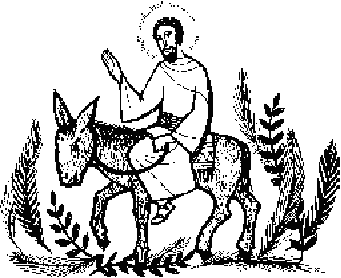
We often think of and remember a gentle Jesus on Palm Sunday. We imagine Jesus coming into Jerusalem bouncing on the back of a borrowed burrow. We think of calm crowds lining the streets and singing "Hosanna" while the religious authorities grow furious. Palm Sunday is the stuff that Children's Bible storybooks are made of as we always ask children to parade for us on Palm Sunday.

But that's not all that happened on Palm Sunday.

None of the lectionary assignments offer the full story of Palm Sunday. We much prefer a gentle Jesus to a Jesus who gets angry. But if we keep reading the story we encounter a Jesus who weeps over the city of Jerusalem and then goes straight to the temple in order to drive out money changers. He even makes a whip in the gospel of John.

What happened to gentle Jesus?

Jesus is furious because the religious authorizes have become so focused on ridiculous rules and saving themselves that they have forgotten the call of God placed upon their lives. They are ignoring the prophets who have instructed them to love God with all they have while loving their neighbor as themselves. They are not doing justice and loving mercy.

We concluded our sermon series on the Seven Deadly Sins today with an examination of the sin called "anger." It's a sin we know well. I get angry when I am driving. I get angry when I feel like my husband is not listening to me. I get angry when untrue statements are made about me. We get angry over all kinds of stuff - much of it not worth our rise in blood pressure.

But Jesus sets a different example for us today. He shows us what it means to have our anger rooted in love and justice. Jesus embodies righteous indignation. This anger is one that can lead to all kinds of change in the world.

When I was preaching this morning I shared different things that make me angry. I arrived downtown just in time to see a young girl who was clearly a victim of sex-trafficking get out of a pick-up truck. I wanted to run the truck down so the man would get arrested. I see victims of sex-trafficking waiting for their pimps to pick them up any time I arrive downtown before 7:00 am - it does not matter what day of the week it is. Sex-trafficking makes me angry.

I also shared how homelessness makes me angry. While I love and adore urban ministry, I serve in a constant tension over what to do with people who sleep on our porches. I hate driving into a city where I pass countless people asleep on park benches. It drives me nuts that corners of our church buildings are regularly used for bathrooms or that the stone is stained by urine. I don't believe that the capital city of the United States of American should have so many homeless people on its streets. A lack of care, programs and affordable housing makes me angry.

And I shared how our United Methodist Church's official teaching on homosexuality makes me angry. I completely disagree with our church's teaching on homosexuality. I believe we are harming people with our teaching instead of doing good. Telling gay and lesbian brothers and sisters that they are incompatible with Christian teaching because of their sexuality makes me angry. Being able to marry a couple who are not members of our church and who have only known each other for a few months while not being able to marry couples who are active members of our church, faithfully following Jesus, and who have been together for decades makes me angry.

What makes you angry?

What would happen if we were to follow Jesus' example and allow our righteous indignation to turn into action this week? What if one of the ways to make this week holy were to allow our anger that is rooted in love and justice be transformed into working for justice for others? What would this change look like?

On Tuesday morning I'll arrive on Capitol Hill at 6:50 to be part of a prayer service before the Supreme Court starts to hear oral arguments on marriage. I'll then process with clergy and followers of Christ to the steps of the Supreme Court. I firmly believe that marriage is a gift that all people should be entitled to receive and enjoy. Perhaps there is no better time for me to be part of this processional and prayers than Holy Week.

But I may need to do more. Before the week is over I may also need to finally schedule that trip to New York City so our church members can see a transformational model of homeless ministry. I may also need to reconnect with Courtney's House to see what more we can do to get victims of sex-trafficking out of the hands of pimps and into a more abundant life.

What makes you angry?

How could your anger be transformed into working for change this Holy Week?

Thursday, March 14, 2013

Why My Church Needs Pope Francis

"I knew the difference between transubstantiation and consubstantiation before I could even ride a bike." 

These words are the words that started the best admissions essay I read in my four years as Director of Admissions for Duke Divinity School.  The student who wrote these words ultimately chose another school. I cannot remember his name, but I'll never forget his brilliant essay. He was an exception - and so are his words.

Though I was raised in the church and went through confirmation classes, I had no idea what the words "transubstantiation" and "consubstantiation" meant until I got to seminary. I knew there were differences between the Protestant United Methodist Church of my upbringing and the Catholic Church but I could not tell you what they were.

It did not matter.

My parents found enough of the spiritual life they needed at the Methodist Church, and I went right along. Why did I need to learn about the Catholic faith? It seemed more important to me to keep on going to what made sense to me while others continued to go to the church of their own choosing.

I continue to value diversity when it comes to our faith. There are many Sundays when I long for the fresh winds of the Spirit that blow through the Assembly of God Church in tangible ways. There are other Sundays when I would not mind a little incense when we think about the aroma of the offerings we make towards God. There are still other Sundays that I wish we had an immersion pool to use when we baptize adults so that we could see the power of dying to our sins and being raised with Christ. As I look at all the different denominations founded on Jesus, I believe we have more in common with each other than we allow ourselves to believe. Though we are far from being one, there are many things in which we find a oneness.

And to the outside, we are one. We are simply "the church" which means that when one member suffers we all suffer together.

One of the most compelling books I have read by someone who left the faith is William Lobdell's "Losing My Religion."  I found the book in a local Busboys and Poets, started to read it and could not set it down. Lobdell tells a powerful story of falling in love with God, having a mountaintop experience with Jesus, and then being assigned by the Los Angeles Times to cover the child sex abuse case in the Catholic Church. His eight years on the religion beat exposed him to a giant cover-up overflowing with hypocrisy, efforts to cover the church's ass at all costs, and deep corruption. He lost his faith completely and there are countless others like him. Even my search for the book on Amazon just now paired Lobdell's book with two additional books about preachers who left the church and became atheists. Sometimes the closer we get to the fire the more we get burned.

"If one part suffers, every part suffers with it; if one part is honored, every part rejoices with it." Paul wrote these words to a church that had no idea how many divisions awaited it. But we do. I know well what happens when one part of the body is going astray, and how this one part impacts everyone.

I see it every time Westboro Baptist Church shows up to picket with signs full of hatred. Many of us know that Westboro is the farthest thing from Christ's love, but they still call themselves a church, and their actions impact me and my church.

I saw it when a member of the United Methodist Church compared homosexuality to beastiality on the floor of our General Conference last year, when delegates to our church's meeting could not even agree to say that we disagree. Our actions impacted countless other churches whether Methodist or not.

I see it every time a member of the cloth gives into the temptation we all face on a daily basis whether it is an extramarital affair or sins around money.

And perhaps even my life has been a stumbling block to others at times whether it is how I choose to spend my money, the words that come from my mouth, or the choice of beverage in my hand.

Our actions matter. Most people have no idea what the difference is between transubstantiation and consubstantiation and most people don't care. They see one church - a church that is constantly falling short of the glory of God - a church with leaders who are regularly falling and sinning - a church that is a long way away from what Jesus created it to be when he said, "You are my body."

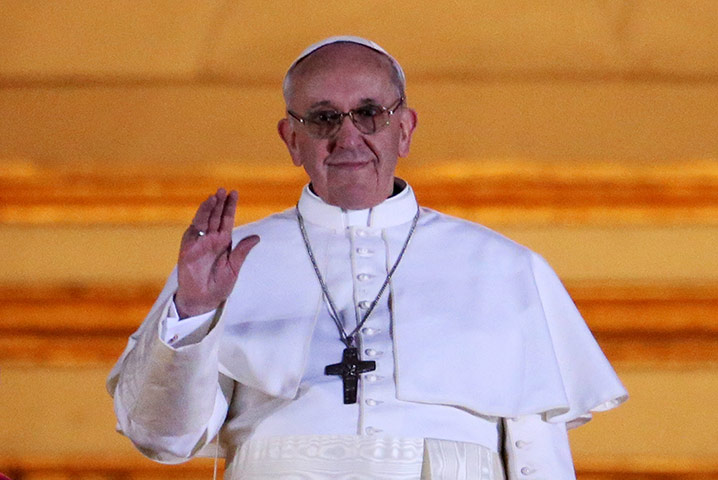
Pope Francis did two incredibly prophetic things yesterday within the first hour of his life being transformed. First he took the name Francis. He took the name of a Saint whose legacy continues to have a profound impact today. It was Francis of Assisi who said, "Preach the Gospel at all times and use words only when necessary." It was Saint Francis who had a life-giving ministry to and with the poor. It was Francis who said, "make me an instrument of your peace."

Our church - our Protestant and Catholic Church - can learn a lot from Saint Francis. We have come a long way from his simple life amongst people we consider poor. We could use more of Francis' legacy in our churches.

Pope Francis then asked an overflowing crowd to bless him - to pray for him. Our church - our Protestant and Catholic Church - could be transformed if all our members took time to daily pray for their pastors, priests, bishops, nuns and pope.

The eyes of the world are upon the church once more. They are upon the Catholic Church, waiting to see if Pope Francis can bring about reform and healing to a church known for monetary and sex scandals. What Francis does matters - not just to Catholics but to my United Methodist Church, too. I'm praying for Pope Francis, that he may be a saintlike leader just like his namesake, having courage to make much needed changes. And as I pray for him, I'm also praying for me and my own church. Forgive me for all I have done to ever lead someone away from God and the church instead of towards it. Forgive us for our hypocrisy, for being anti-homosexual as a denomination, for not always being like Christ. Forgive us for building a fortress when we had an opportunity to instead set up a foundation that gave money away where it is much needed.

There's a lot at stake. I love the church. I believe Jesus still has the power to change and transform lives and that he does it best through the church. The city in which I live desperately needs the church. I need the church. Our world needs the church - at its very best - Christ's body reaching out, bringing in, loving, serving, caring and transforming.

God, make us all instruments of your peace....and love, and mercy and grace. Make us like you. Amen.

Tuesday, February 26, 2013

Doing Lent Well

I don't do Lent well.

I'm a professional Christian - one who gets paid to tell others about Lent. I've written newsletter articles about Lent and suggested a million different ways for others to observe this sacred season of fasting, repentance and reflection. But I don't do Lent well.

Give up caffeine? I love my early morning coffee and afternoon Diet Coke.

Give up alcohol? I don't drink that much, and red wine is good for my heart. Right?

What about chocolate? Are you kidding me? It's one of my favorite things.

Cursing? I only curse in the car. Well, I try to only curse in the car.

When people ask me about my Lenten disciplines, I have an uncanny ability to turn the conversation around so I can hear all about another person's sacrifices. But oftentimes people keep prodding. "So, what are you doing for Lent, pastor?"

I told someone last week that I was trying to write more notes to people, expressing my gratitude. She commented on how I do this anyway. Her response was enough for me to see that maybe it was not a Lenten discipline, but a regular practice I seek to embody.

I'll return to Holy Cross Abbey for five days of silence, reflection, prayer, reading and walking the week after next. But can anyone say that a week in a thin place where heaven and earth collide for me is really a Lenten discipline? I don't fast at the abbey but rather have my fill of the creamed honey slathered on toast that the monks produce as a fundraiser.

I just proofed a bulletin for the Third Sunday of Lent. The season is marching on at a rapid pace. Ready or not, Holy Week is on the horizon at the end of next month - a month that starts this Friday.

I don't do Lent well.

But maybe, just maybe, God does Lent for me - getting me right where God wants me so that God can change my heart.

I completely overreacted one day last week when I came back from lunch and realized all of the trash from the morning shower ministry was just outside one of our church entrances. It had been there since 8:00 in the morning which means that hundreds of people had passed by a church that did not seem to care enough to even get its trash to the dumpster. It was an honest mistake - but one that made me steam for a while and then be obnoxious towards a hardworking, dedicated volunteer.

I've been praying since last Thursday that I would not react that way again - ever. I've been asking God to give me a better understanding and awareness of church members who pour their heart and soul into a ministry that is the equivalent of Jesus washing the feet of his disciples. I've been begging for more patience or an attitude that takes care of things that get left behind without making a big deal out of it. God's working on me. God's got me right where I need to be.

I went to bed last night tossing and turning over what my role is as a pastor. It was a rough day of pastoral care needs, and I had no idea where to start. Too often I'm caught between competing demands - some of which have little to do with why I responded to God's call on my life. As I wrestle with administration and pastoral care, the needs of a building and the needs of people, I hear my heart crying out for guidance on how to be a more faithful pastor. I don't want to be the CEO of a small non-profit downtown. I'm a pastor - a person called to journey alongside of people in joy and pain. Maybe God is in the center of this searching, pushing me back to what's important in small and subtle ways.

I don't do Lent well if Lent is defined as giving up chocolate, Diet Coke or a glass of merlot. I don't do Lent well if Lent means praying an hour a day or spending more time with the lonely and forgotten. But if Lent means allowing God to take hold of me once more, like a potter gently applying moisture to a bit of clay in order to smooth out the rough places, then maybe, just maybe, God's got me doing Lent just the way God wants me to.

What about you? How well do you do Lent?

Saturday, February 09, 2013

Sewing Fig Leaves

I spent yesterday with ten clergywomen who gathered to learn more about preaching from Anna Carter Florence. It was a remarkable day in every way and one that was centered on a well-known text, Genesis 3.

We know the story well enough to have pictures in our head of an apple tree, a man, a woman and a serpent. But yesterday the story came to life on a variety of levels as we used this text to testify about who God really is - and how God worked in this one dysfunctional family.

My mind and heart are returning to a million different places in the text. But as we approach the season of Lent, the one verse that keeps coming back to me is verse 7, "Then the eyes of both were opened, and they knew that they were naked; and they sewed fig leaves together and made loincloths for themselves."

Have you ever sewed fig leaves? I'm not much into sewing with fabric let alone using a material that could crumble at the touch with a surface that is far from smooth.

We are tempted to think that somehow Adam and Eve covered themselves in the garden with whatever was close by. But the text says they sewed fig leaves together. They had to go and get a bunch of leaves, some string and a needle. They sewed together things that don't easily hold together. The process would not have been quick. It could have taken them hours - or even a full day.

Later, with their underwear made of fig leaves hiding parts of their body, they also hide from God. When they hear God walking in the garden, they hide. Adam says in verse 10, "'I heard the sound of you in the garden, and I was afraid, because I was naked; and I hid myself.'"

What are the efforts we go to in order to hide from God?

Why do we work so hard to hide our shortcomings, our failures, our mistakes from those who love us most?

What ridiculous things do we do in hopes of covering our mistakes from God?

Where have we taken time to sew together fig leaves instead of presenting the naked truth to God who sees us, searches us and knows everything about us?

One of the gifts of the season of Lent is that we get to spend time practicing repentance - rehearsing our return to God. For forty days our focus becomes letting go of our sin - those things that separate us from God - and coming clean - baring it all to God.

We will gather in sanctuaries on Wednesday, marking the beginning of Lent with smudges on our forehead in the shape of the cross as we hear the words "from dust you came and from dust you shall return." When you hear these words, I invite you to embrace them. Allow the words to be an invitation to stop your futile efforts of trying to sew fig leaves together against all odds and instead embrace the one who loves you, adores you and longs for you to come clean. Stop hiding. Come out. Accept the gift of forgiveness, redemption and new life.

Holy God, as the season of Lent stands on the horizon, I pray you would start searching my heart and examining my life. Enable me to see the places where all is not well, where sin has crept in like a thief in the night - in large ways that are abundantly known to me and in subtle ways that I tend to forget or ignore. Show me where I need to realign my life around you and your ways. Help me to get back on track. Encourage me to stop hiding from you but instead to come before you with my naked truth, knowing that you love me far too much to leave me where I am. Allow this season to be one of letting go so new life can come. Amen.

Monday, January 21, 2013

The Middle Way

I first met Adam Hamilton when I was a student at Duke Divinity School. For whatever reason, I was given the opportunity to host him during a visit to the school in the late 90's. This privilege of providing hospitality afforded an opportunity to share a meal of North Carolina's finest food at Durham's Bullock's Bar-B-Que while also hearing stories of the United Methodist Church of the Resurrection when it was in its first decade of life. Adam taught me much that day as he shared the story of the church's founding and his leadership principles. And he's continued to offer countless lessons in the years since.

The best continuing education event I have ever attended is the Leadership Institute at the Church of the Resurrection. The most helpful course I took as part of my Doctor of Ministry studies was a class with Adam on "Sermon Series that Engage the Mind and Heart." I've used his stewardship curriculum and borrowed parts of his teaching on spiritual gifts.


Adam Hamilton represents the best of the United Methodist Church. And it's not just Adam as a person or as a leader. It's the ways in which Adam so artfully articulates and teaches the best of our Wesleyan theology. Tomorrow, Adam gets to offer our nation the best of the United Methodist Church as the preacher at the Inaugural Prayer Service.

When I shared my excitement about Adam's selection as tomorrow's preacher on Facebook, someone immediately commented, "Is it true that they are removing the BIBLE from this inauguration?"

We have a tendency to become easily upset by small pieces of fiction, don't we?

But we are also regularly tempted to believe that the presence of a Bible makes a difference.

But a symbolic Bible does nothing. What makes a difference is the way in which we interpret and embody what's inside the Bible. And the best thing about the United Methodist Church - one of the things that makes me most grateful for our church - is the way we seek to interpret and then faithfully live what we read on the pages of scripture.

The founder of Methodism, John Wesley, learned much from the religious and political leaders who ruled before he was born. When Henry VIII was replaced by Edward VI in 1549, the Church of England gravitated towards the Reformed tradition, allowing the influences of the reformers to be felt in tangible ways. But when Edward died, Mary Tudor became queen, and England was restored to a place that took its cues from Rome. The Roman Catholic Church then lost its grip on the nation's church when Elizabeth I came on the throne in 1558. With Elizabeth, a new way emerged, the via media, the middle way. The middle way straddled the best of both Rome (Catholicism) and Geneva (Reformed). The middle way was paved well and provided the foundation on which John and Charles Wesley continued to journey and eventually birth Methodism.

John and Charles discovered that one did not need to limit their understanding of theology to what was taught in the high Anglican church. Rather, they could also begin to embrace lessons learned from the Moravians, particularly their emphasis on personal holiness and awareness of God's love in one's life. Right teachings were not accepted as the most important thing. Rather, the Christian life - the experience of God combined with the tradition of the church - proved more instructive and important than a rigid orthodoxy. While core doctrines were non-negotiable, John Wesley articulated a need to allow a variety of opinions on how best to articulate, explain or teach these doctrines. Furthermore, there are countless things about God that just cannot be understood or explained if using only scripture or narrow doctrines. God is bigger!

Today, Methodists describe our way of doing theology through the lens of the Wesleyan Quadrilateral. We hold that our faith was revealed in scripture, illumined by tradition, confirmed by reason and vivified through personal experience. There is not just one way to read a Bible. In fact, there are countless ways of interpreting scripture. Furthermore, scripture must always be held in tension with the traditions of the church. And, our experiences of God throughout life are to be inserted into this mix with our reason being the fourth block of getting to the place of understanding.

The middle way has provided the foundation for a church that is large enough for all kinds of people. Rather than say, "The Bible says it so I accept it, believe it or teach it," we are able to carefully study what the Bible says and then even more carefully hold what is written in scripture with what has happened in the last 2000 years and what has happened in our lives. Scripture. Tradition. Reason. Experience. All play a role. Each one is essential to our faith.

Too often the church is quickly labeled too conservative or too liberal. Preachers are judged even quicker as they are invited and then dis-invited to play a public role because of something they have said or written - even more than a decade ago.

I wonder how many of Adam's sermons were listened to by someone at the White House before an invitation was extended. I would be curious to know how many people went through his preaching and teaching with a fine tooth comb. And still, he was invited. He was proven to have the capacity to walk the middle way.

While people watching my Facebook feed today may conclude that I lean a little to the left or am rather excited about what our President "preached" earlier today, I can think of nothing more miserable than having a church filled with people of the same mind and same opinion. I regularly describe Mount Vernon Place as being liberal and conservative...along with gay and straight, Democrat and Republican, lifelong church goers and people new to the church, Catholics and Methodists, young and old, Washingtonians and Suburbanites and countless other things.

I would not have it any other way. It would be miserable to just have one way, one belief, one doctrine, one understanding represented in the life of our faith community.

We grow when we learn from each other's differences. We are strengthened by opinions that are different from our own.

God comes to us in so many ways. Diversity should always be one of the most recognizable traits in the body of Christ.

I'm so grateful that Adam gets to share our middle way with our nation tomorrow. It's the best part of being a Methodist. This is the best of the United Methodist Church!

What would happen if all of us were willing to walk in the middle - opening ourselves to receive the best from all sides around us?

Friday, January 18, 2013

The Sound of Silence

I saw the movie Lincoln last week. Like countless critics and lovers of film, I highly recommend this particular picture to anyone who wants to be reminded where we were and how far we have come. Lincoln is nothing short of spectacular.

But there is a part in the film that is still haunting me. There is one scene that will not leave my mind....or my heart.

The proposed 13th Amendment to the Constitution has finally reached the floor of the House. A diverse crowd is shepherded into the visitor's gallery above passionate and angry Members of Congress below. A heated debate starts to take place and then votes are cast one by one. There is some cheering and some groaning as individual members vote "aye" or "nay." As the voting is close to being finished, cameras take us back to the White House, zooming in on the President.

President Lincoln is 1.6 miles from where votes are being cast. There were no Blackberries or CSPAN or Facebook to inform him immediately of the vote. Rather, Lincoln receives the news through a different sound. He knows that the 13th Amendment has passed because church bells start to ring. Houses of worship, churches centered on the good news of one who came to proclaim release to the captives and freedom for the oppressed, ring in joyous celebration. The windows of the White House are flung open as the bells continue to ring. The sound is sweet and familiar. But not all bells would have been ringing.

In fact, the bells at my church would have been silent.

There would have been no celebration coming from the church I serve. We would not have been celebrating this momentous passage of a bill that finally offered full freedom to oppressed people because of the color of their skin. Rather, our church was built as a monument to the opposite.

Mount Vernon Place was founded in 1850 by 50 people who believed that the Methodist Episcopal Church South needed a representative church in the nation's capital. The 50 people had nearly quadrupled in size at the start of the Civil War, growing to nearly 200 members. When the war waged on, people moved on and the nearly 200 people were reduced to their original 50. There were 50 folks who believed in the institution of slavery, standing behind the new denomination that came to be when Bishop Andrews acquired slaves in 1844, causing the denomination to split.

When the building was built in 1917, no expense was spared. The structure cost $280,000 to complete with $220,000 of this amount coming from people around the country who joined in support of slavery. The monumental church is hard to miss - though most people mistake it for a museum. It's quite a building, and I wish regularly that the walls could talk.

Thankfully, those inside did start to talk. One of my favorite stories to tell is about Rev. Dr. John Rustin who served as our pastor from 1935 to 1950. I've heard enough stories about him to know he was quite a leader. Some of our longtime members are convinced, I am certain, that Dr. Rustin is sitting next to God in heaven. When Dr. Rustin left, the Washington Post wrote an article about him following his last Sunday. These words were printed in that article:

"Doctor Rustin told the congregation, 'the trouble with the church is that it is not liberal enough,' and then spelled out what he thought the church of the future should be like. 'When the church becomes a real factor in the life of the people,' he said, 'first of all, it has vision and is not expending all its energy in defending creeds or standing on ancient dogmas. 'It should challenge the people to move beyond its warped emotions and deep-seated prejudices,' he continued, 'and it should always move into action."

Amazing, isn't it? Dr. Rustin worked hard to make sure that the bells of our church would never be silent again. It was almost a century after the passage of the 13th Amendment when he preached these words but more than a decade before Dr. King started to march in Washington.

I regularly wrestle with his words.

Where do we need to stop standing on ancient dogmas? Where do we need to move people beyond our warped emotions and deep-seated prejudices? How do we do everything within our power to make sure our bells are never again kept silent?

Each time I walk past our church I see words etched in the stone that continue to be my call to action. When I read "Mount Vernon Place Methodist Episcopal Church South," I am reminded of how we have spent our early years opposing the good news of Jesus Christ instead of being his hands and feet tirelessly working for equality. Our original stance has changed, and it must continue to change.

While we have traveled long roads towards diversity, building a congregation that is considered "multi-ethnic" in the eyes of the denomination, we have a long way to go. Our denomination is still oppressing people. We are still causing harm to others, elevating heterosexual people above homosexual people, telling some of the best Christians I know that their lives are incompatible with Christian teaching. We are standing on the wrong side of another civil right when it comes to who can be married by our pastors and our churches. Our bells are not ringing on the side of equality. We are voting "nay" instead of "aye" when it comes to treating all people equally.

When I heard the bells ringing in a movie theatre last Friday afternoon, I heard them as a call from God, a reminder that God still needs people who will work tirelessly until the oppressed are set free once more.

The sound of silence is deafening.

May our bells never again remain silent.

Tuesday, January 01, 2013

A Clean Slate - A Fresh Start - A New Beginning

New Year's Day may be one of my favorite days of the entire year. There is something wonderful about knowing that a whole new year has dawned. I love fresh starts and new beginnings. Each new year begins with my making a mental list of things I want to change in my life:

1) I want to commit to going to the gym 4 times a week.

2) I want to commit to a year of counting points on Weight Watchers.

3) I want to start each day with Bible study and prayer, making more room for God.

4) I want to finally find "my place" in downtown Washington - that place where I regularly linger, study, write, and meet people instead of being in my office so much.

5) I want to write more - perhaps even commit to blogging 3 times a week and really take advantage of other opportunities to be published.

6) I want to say "no" to things that take life from me in order to make space for that which makes more of me.

The list could go on and on.

Every gym manager will tell you that today is the best day to have your sales team fully staffed. January will be crowded with people who have promised themselves that this year will be different while March will present many days without a single new member joining.

We are good at making promises to ourselves to live differently. We want to change.

There's a strong chance that I'll accomplish some of the things on my list this year. There's an even greater chance that I won't. But still, I get a clean slate. And so do you.

But this promise of a clean slate is one of the reasons I need God - not just on New Year's Day but on every day. The promises of scripture remind me time and again that I don't have to wait for a fresh start or a clean slate to come just once a year. A new beginning can be offered to me every single day and sometimes several times during the day. A fresh start is mine for the asking. My slate is wiped clean each time I return to God.

Paul writes in 2 Corinthians 5:17, "Therefore, if anyone is in Christ, he is a new creation; the old has gone, the new has come!" We can all be made new.

1 John 1:9 reads, "If we confess our sins, God is faithful and just and will forgive us our sins and purify us from all unrighteousness." Sounds like a clean slate to me.

In Acts 3:19 it is written, "Repent, then, and turn to God, so that your sins may be wiped out, that times of refreshing may come from the Lord." Yes, I'll take a fresh start.

Thank you, God, for the gift of a new year. Thank you for fresh starts, clean slates, new beginnings. May we stay close to you throughout this year. Help us to make wise decisions and give us strength to be faithful stewards of our bodies, our minds, our time, our talent and our resources. And when we fall short, remind us that every day is a new beginning. You are a God who is constantly making all things new. Thank you, God! Amen.

Happy New Year!